
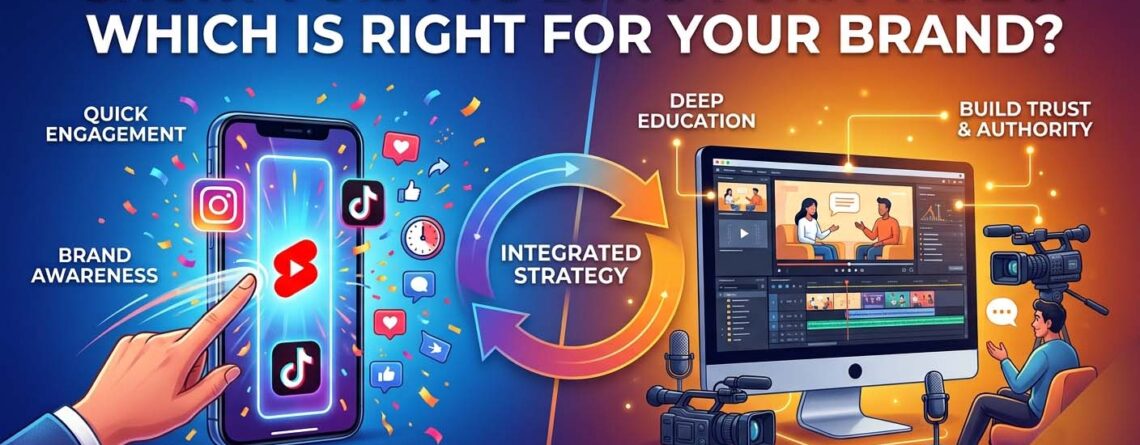
Video has become one of the most powerful ways for businesses to attract attention, explain their products, build trust, and connect with their target audience.
But there is one question many brands face:
Should you focus on short-form videos or long-form videos?
The answer isn’t as simple as choosing one over the other.
Short-form videos are excellent for grabbing attention quickly, increasing reach, and engaging audiences on platforms such as Instagram Reels, YouTube Shorts, and Facebook. Long-form videos, on the other hand, give brands more space to educate, tell stories, demonstrate expertise, and build deeper relationships with their audience.
At Divine Art Lab, we work with businesses to create professional video content designed around their marketing goals. From social media reels and promotional videos to podcasts, corporate videos, motion graphics, and professional video editing, the right format depends on what you want your video to achieve.
So, let’s compare short-form and long-form video and understand where each format fits into your brand’s content strategy.
What Is Short-Form Video?
Short-form videos are brief videos designed to communicate a message quickly.
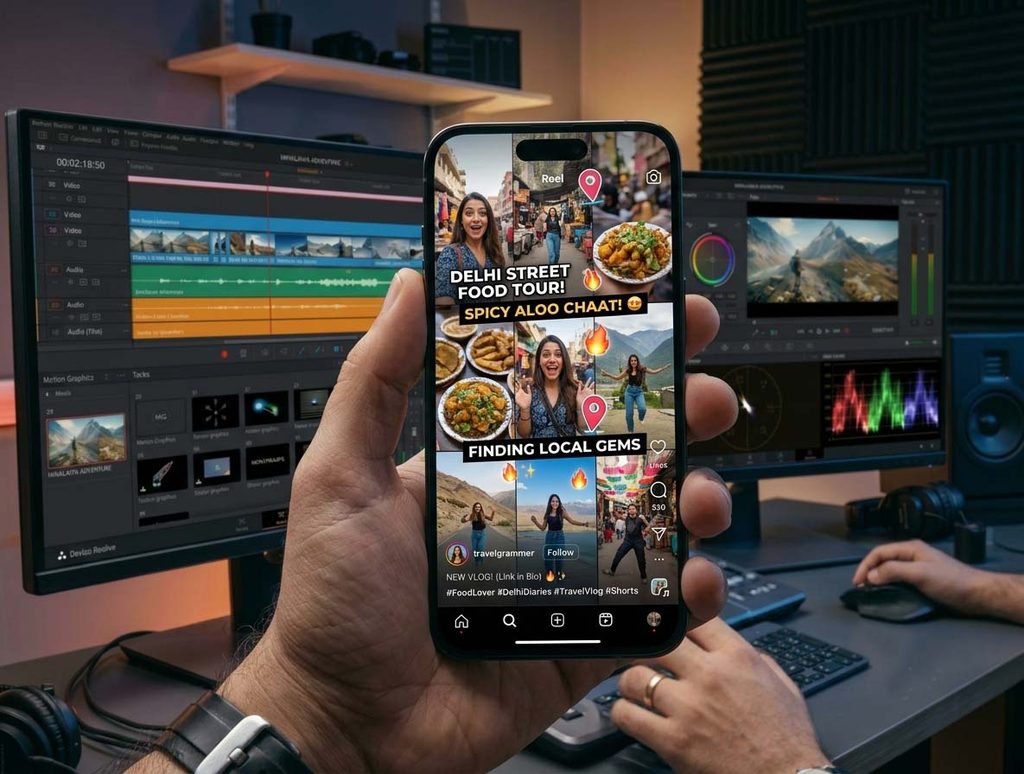
Examples include:
- Instagram Reels
- YouTube Shorts
- Facebook Reels
- Short promotional videos
- Product teasers
- Quick tips and tutorials
- Behind-the-scenes clips
- Educational snippets
- Customer testimonials
- Trending social media content
Short videos are generally designed for fast consumption. The viewer should understand the main idea quickly enough to stay interested and continue watching.
For businesses, short-form content can be useful for:
- Increasing brand visibility
- Reaching new audiences
- Promoting products or services
- Sharing quick information
- Creating regular social media content
- Generating engagement
- Driving users toward longer content or a website
The biggest advantage of short-form video is its ability to communicate an idea without requiring a large time commitment from the viewer.
What Is Long-Form Video?
Long-form videos provide more time to explain a subject, tell a story, demonstrate a product, or educate an audience.

Examples include:
- YouTube videos
- Podcasts
- Interviews
- Webinars
- Corporate videos
- Product demonstrations
- Educational videos
- Case studies
- Tutorials
- Brand documentaries
- Detailed promotional videos
Long-form content allows businesses to go beyond a quick message.
For example, a 30-second Reel might introduce a product, while a longer YouTube video could demonstrate how the product works, explain its features, answer common questions, and show customers why they should consider it.
This makes long-form video particularly useful when the audience needs more information before taking action.
Short-Form vs Long-Form Video: Key Differences
| Feature | Short-Form Video | Long-Form Video |
|---|---|---|
| Typical Purpose | Reach & engagement | Education & deeper connection |
| Content Style | Quick and focused | Detailed and informative |
| Best For | Reels, Shorts, social media | YouTube, podcasts, interviews |
| Viewer Commitment | Low | Higher |
| Content Depth | Limited | Extensive |
| Main Strength | Capturing attention | Building trust and authority |
| Examples | Reels, Shorts, teasers | Tutorials, podcasts, webinars |
| Marketing Role | Awareness & engagement | Consideration & conversion |
Neither format is automatically better for every business.
The right choice depends on your audience, platform, content goals, and marketing strategy.
Why Short-Form Video Is Important for Brands
Social media has changed the way people consume content.
Instead of spending several minutes watching every video they encounter, users often scroll through multiple pieces of content in a short period.
That’s where short-form video becomes valuable.
1. It Captures Attention Quickly
A short video has limited time to communicate its message. This encourages brands to focus on strong visuals, clear messaging, and engaging editing.
A well-edited Reel can introduce your brand, showcase a product, or communicate a useful tip within seconds.
2. It Works Well for Social Media
Short-form content fits naturally into platforms built around fast-moving content.
Brands can create Reels and Shorts to showcase:
- Products
- Services
- Offers
- Tips
- Customer experiences
- Behind-the-scenes content
- New launches
- Company culture
3. It Makes Consistent Content Easier
Businesses need consistent content to remain visible online.
A long-form video can often be repurposed into several smaller pieces of content.
For example:
1 Podcast → 5–10 Short Clips → Multiple Social Media Posts
This allows brands to get more value from a single content production session.
4. It Can Introduce Your Brand to New Audiences
Short-form videos are particularly useful for creating awareness.
A viewer who has never heard of your business can discover your content through a Reel or Short and then move toward your profile, website, YouTube channel, or other content.
Why Long-Form Video Is Important for Brands
Short videos can get attention, but long-form videos can provide the depth required to build understanding and trust.
1. It Gives You More Space to Explain
Some products and services simply cannot be explained properly in 20 or 30 seconds.
Long-form videos allow businesses to explain:
- How a product works
- Why a service is useful
- How a process works
- Customer problems and solutions
- Industry knowledge
- Product features
- Detailed tutorials
2. It Helps Build Expertise
Educational videos, interviews, podcasts, and detailed tutorials give brands an opportunity to demonstrate knowledge.
Instead of simply saying that your business is an expert, useful long-form content allows you to demonstrate that expertise.
3. It Supports Storytelling
Stories often require time.
A corporate video, customer success story, interview, or brand documentary can use long-form content to introduce a problem, explain the journey, and present the outcome.
4. It Can Support the Buying Decision
When someone is considering a product or service, they may need more information before contacting a business.
A detailed video can answer questions and remove uncertainty.
This is especially useful for:
- High-value services
- Complex products
- Professional services
- B2B businesses
- Educational brands
- Technology companies
Which Is Better for Your Brand: Short-Form or Long-Form?
Instead of thinking about short-form versus long-form as a competition, think about them as different parts of your content strategy.
Choose Short-Form Video When Your Goal Is:
- Increase social media reach
- Grab attention
- Promote an offer
- Showcase products quickly
- Share tips
- Drive traffic toward another piece of content
- Create regular social content
- Introduce your brand
Choose Long-Form Video When Your Goal Is:
- Educate your audience
- Explain complex topics
- Build authority
- Tell a detailed story
- Create podcasts or interviews
- Demonstrate products
- Answer frequently asked questions
- Support customers during the buying journey
For many businesses, using both formats together can create a stronger content system.
The Best Strategy: Use Long-Form Content to Create Short-Form Content
One of the most practical approaches for modern brands is to create one valuable long-form video and repurpose it into multiple short-form videos.
For example:
Podcast Episode
↓
Full YouTube Video
↓
Educational Clips
↓
Instagram Reels
↓
YouTube Shorts
↓
Facebook Videos
↓
Website Content
This approach allows one content idea to work across multiple marketing channels.
Instead of constantly creating completely new content, your business can turn one strong piece of content into several smaller assets.
How Professional Video Editing Makes a Difference
Creating a video is only one part of the process.
Professional video editing can transform raw footage into content that looks polished, communicates clearly, and keeps the viewer engaged.
At Divine Art Lab, our video editing services include professional video editing, podcast editing, corporate and business videos, motion graphics and titles, promotional videos, and thumbnail editing.
Professional editing can help improve:
- Pacing
- Storytelling
- Visual consistency
- Audio quality
- Transitions
- Motion graphics
- Text and titles
- Brand presentation
- Social media compatibility
- Overall viewer experience
For short-form videos, editing needs to keep the content moving and focused.
For long-form videos, editing needs to maintain flow and remove unnecessary sections without losing the story.
Short-Form and Long-Form Video Can Work Together
A strong video marketing strategy doesn’t necessarily require your brand to choose only one format.
Instead, you can use each format for a different purpose.
For example:
Long-form video → Builds knowledge and trust
Short-form video → Creates awareness and engagement
Website → Provides detailed information
Call-to-action → Converts interested viewers into leads or customers
This creates a content journey where different types of videos support different stages of the customer’s decision-making process.
Example Video Strategy for a Business
Imagine you own a fitness brand.
You could create:
Long-Form Content
A 20-minute YouTube video explaining a complete beginner workout routine.
Then turn that video into:
Short-Form Content
- 30-second exercise tips
- Common workout mistakes
- One-minute fitness advice
- Motivational clips
- Trainer highlights
- Quick nutrition tips
The long-form video provides depth, while the short-form videos help introduce the content to a wider audience.
The same strategy can work for:
- E-commerce brands
- Restaurants
- Real estate businesses
- Educational companies
- Professional services
- Healthcare businesses
- Startups
- Local businesses
- B2B companies
How to Choose the Right Video Format
Before creating your next video, ask these five questions:
1. What Is My Goal?
Are you trying to create awareness, generate leads, educate customers, or promote a product?
2. Who Is My Audience?
Different audiences consume content differently. Understand where your target customers spend their time and what type of content they prefer.
3. What Platform Am I Targeting?
Instagram and YouTube Shorts may require a different approach than YouTube, a website, or a corporate presentation.
4. How Complex Is My Message?
A simple offer may work perfectly as a short video.
A complex service may need a detailed explanation.
5. Can I Repurpose This Content?
Think beyond a single video.
A good content strategy considers how one video can become multiple pieces of content.
Final Thoughts
So, short-form vs long-form video—which is better for your brand?
There isn’t one format that works for every business or every marketing goal.
Short-form video is useful for quick engagement, social media visibility, brand awareness, and reaching audiences with concise content.
Long-form video is useful for education, storytelling, detailed explanations, interviews, podcasts, and building deeper audience relationships.
For many brands, the most useful approach is not choosing one over the other, but creating a content strategy where short-form and long-form videos work together.
At Divine Art Lab, we help businesses turn ideas and raw footage into professional video content designed for modern digital platforms—from social media videos and promotional content to podcasts, corporate videos, motion graphics, and more.
The goal isn’t simply to create more videos. It’s to create the right videos for the right audience, platform, and business objective.
Ready to turn your video content into a stronger brand experience?
Let’s create something that connects, engages, and helps your business grow.





Leave a Reply